
A working index of what the guide covers, rendered as a single object
MeritWEB's subject is the specific: a named typeface with a designer and a release date, a browser feature with a version number and a ship date, a product interface or a page that set a convention others followed. This index collects everything published so far into one place and holds the shape of the guide's scope.
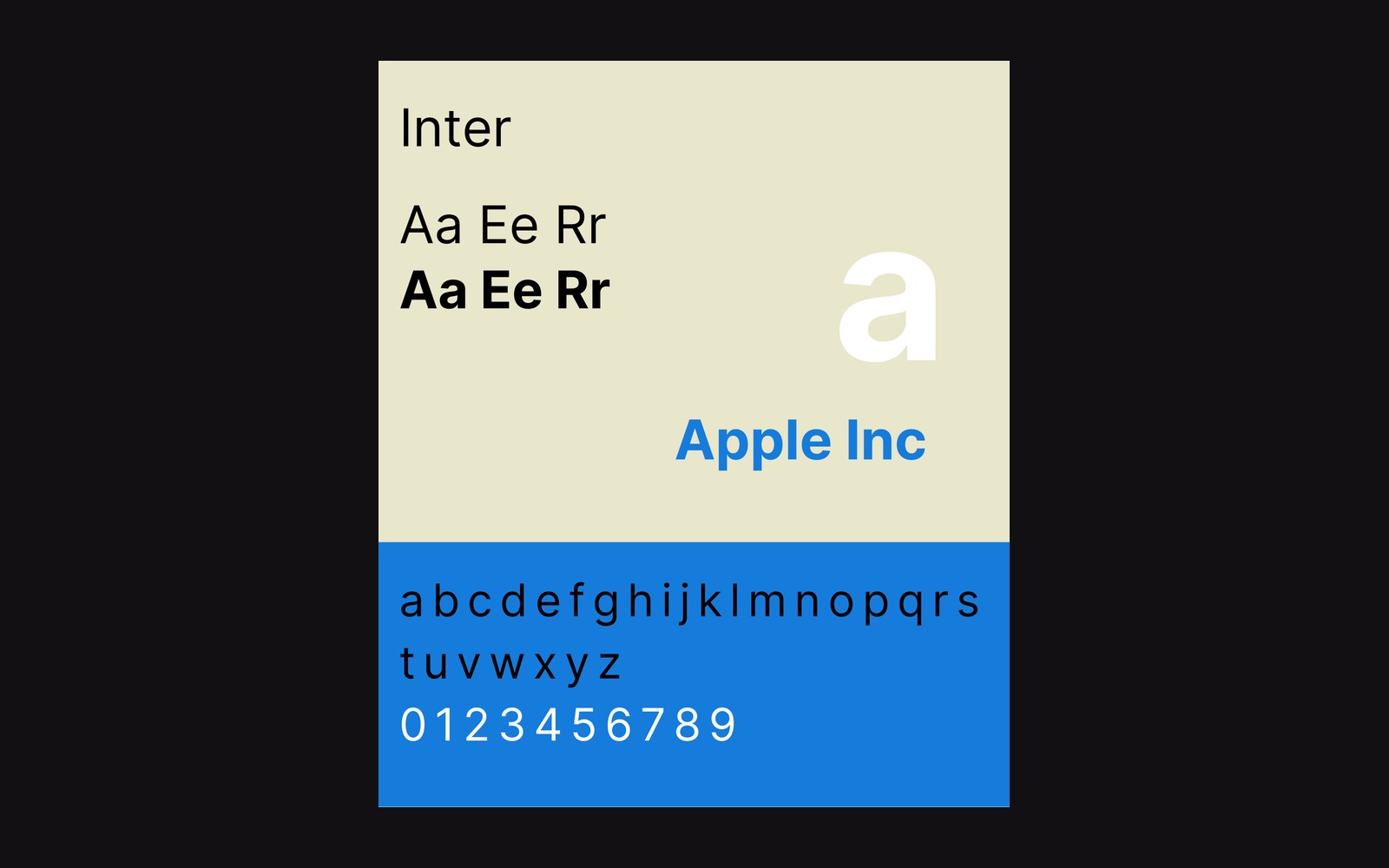
The type coverage runs from the drawing-room decisions — Inter's single-storey lowercase g, drawn by Rasmus Andersson and released free, set against Söhne, Kris Sowersby's reinterpretation of Akzidenz-Grotesk at the Klim Type Foundry — to the delivery infrastructure. Variable fonts, formalised when OpenType 1.8 landed in 2016, collapsed one file-per-weight workflows. Hinting, subpixel rendering and the x-height decisions that distinguish a face drawn for a screen from one adapted to one are their own subject; so is who pays for a typeface, because the funding model shapes what gets drawn.
The browser-feature strand is dated and sourced throughout. CSS Grid shipped in Chrome 57 and Firefox 52 in March 2017, the first layout system designed for two-dimensional work. Container queries reached every major engine in 2023. :has() — the parent selector the field had asked for for two decades — crossed the same line in December 2023, removing a category of JavaScript. prefers-color-scheme, which made dark-mode preference readable to CSS, landed in 2019 and produced a genre that repays treating as a palette problem rather than a colour inversion.
The field's public argument — in A List Apart, Smashing Magazine, and the archives they left — rounds the coverage out.
Tools have their own thread: Figma, where Adobe's attempted acquisition was announced in September 2022 and abandoned in December 2023; Webflow and Framer, which emit the site rather than a picture of it; design tokens, which turn taste into named values a build step can enforce. The utility-class debate — whether styles belong in a stylesheet or beside the markup — is here too, traced to its arguments rather than its camps.
- 2016OpenType 1.8, variable font format
- 2017CSS Grid, Chrome 57 / Firefox 52
- 2019
prefers-color-scheme - 2022Adobe announces Figma acquisition
- 2023Container queries and
:has()reach all major engines; Adobe abandons acquisition

The pages-as-objects strand covers Stripe's marketing site, which made careful typography and well-set tables into a house style; Linear's dark, dense product page, which became a genre; scroll-driven animation, which was mainstream in JavaScript years before CSS could do it natively; and bento grids, which CSS Grid made cheap enough to become a visual convention. The field's public argument — in A List Apart, Smashing Magazine, and the archives they left — rounds the coverage out.